
Reading Passage: The Frontier of Modern Cybersecurity (Grade9)
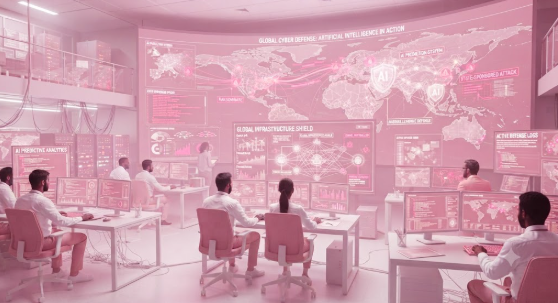
As our world becomes entirely digital, cybersecurity has evolved far beyond basic password protection into a complex, highly advanced shield for global infrastructure. The most sophisticated threat today involves state-sponsored cyberattacks and automated ransomware that can cripple entire electrical grids or financial systems in seconds. To counter these invisible dangers, modern security systems rely on artificial intelligence to predict and neutralize threats before they strike. This proactive approach utilizes machine learning to analyze network traffic patterns and flag anomalies that might indicate a breach. Ultimately, protecting sensitive personal data and national security requires constant vigilance, as the battle between cybercriminals and digital defenders is a continuous race of technological innovation
Fill in the Blanks
Instructions: Fill in the missing words based on the passage above.
- Cybersecurity has evolved far beyond basic _______________ protection into a complex shield for global infrastructure.
- Automated _______________ is capable of crippling entire electrical grids or financial systems in seconds.
- Modern security systems rely on artificial intelligence to predict and _______________ threats before they strike.
- Proactive cybersecurity approaches utilize machine learning to analyze network traffic patterns and flag _______________.
- The ongoing battle between cybercriminals and digital defenders is a continuous race of technological _______________.
Multiple Choice Questions (MCQs)
Instructions: Choose the correct answer for each question.
1. What is the central theme of the passage?
- A) The history of the internet
- B) How to create a secure password
- C) The advanced nature of modern cybersecurity
- D) The rise of social media networks
2. What type of automated cyber threat is specifically mentioned as capable of crippling infrastructure?
- A) Phishing emails
- B) Ransomware
- C) Computer viruses
- D) Spam messages
3. According to the text, what do modern security systems rely on to predict threats?
- A) Artificial intelligence
- B) Manual human inspections
- C) Basic antivirus software
- D) Government regulations
4. What does the passage say machine learning analyzes to flag anomalies?
- A) Personal text messages
- B) Network traffic patterns
- C) Computer hardware components
- D) Social media profiles
5. Why are cyberattacks described as affecting “global infrastructure”?
- A) Because they only affect local schools
- B) Because they can disrupt major systems like electrical grids and financial networks
- C) Because they require physical damage to buildings
- D) Because they only occur in one country
6. What does the word “neutralize” most likely mean in the context of the passage?
- A) To make a threat worse
- B) To stop or render ineffective
- C) To ignore a problem
- D) To copy data to another drive
7. Modern cybersecurity is described as being “proactive.” What does this mean?
- A) Waiting for an attack to happen before fixing it
- B) Acting in advance to prevent threats before they strike
- C) Relying entirely on manual labor
- D) Deleting all sensitive data permanently
8. What is required to protect sensitive personal data and national security?
- A) Constant vigilance
- B) Turning off the internet completely
- C) Using the same password for everything
- D) Hiring more entry-level workers
9. The relationship between cybercriminals and digital defenders is described as:
- A) A historical event that has ended
- B) A friendly collaboration
- C) A continuous race of technological innovation
- D) A minor issue with an easy solution
10. What tone does the author maintain throughout the passage?
- A) Comical and lighthearted
- B) Serious and informative
- C) Uninterested and dismissive
- D) Angry and panicked