THE DIGITAL BATTLEFIELD: BECOME A CYBER DEFENDER!
Imagine waking up one morning and discovering that your favorite game account has been stolen, your photos have disappeared, or someone has secretly accessed your personal information. Scary, right? This is why cybersecurity has become one of the most important skills of the 21st century.
Every time you use a smartphone, play an online game, send a message, watch a video, or log in to a website, you are connected to the digital world. Just like we lock the doors of our homes to keep them safe, we must protect our digital lives from cyber threats.
WHO ARE THE DIGITAL ATTACKERS?
where it works ?
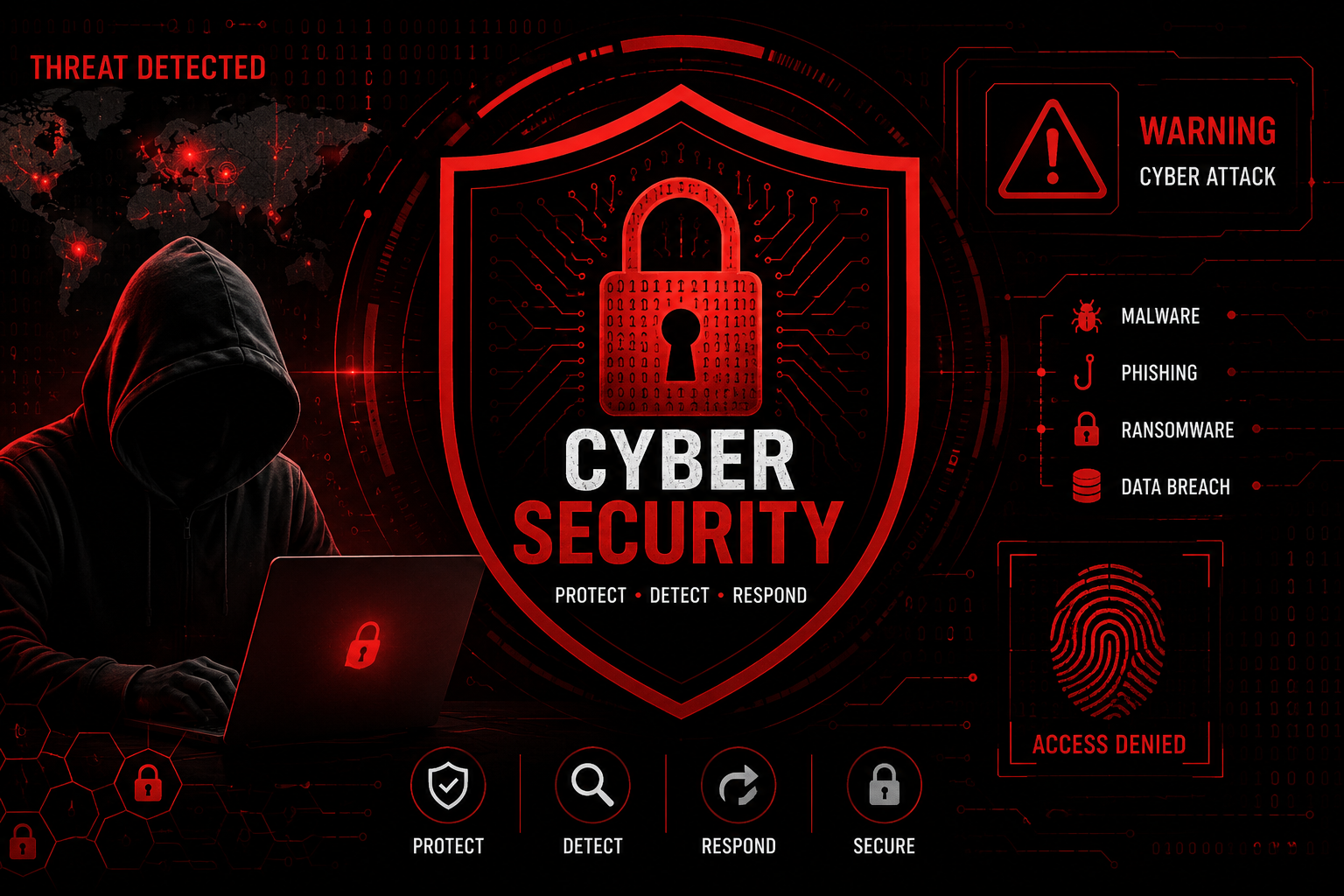
Cybercriminals use different tricks to steal information, damage systems, or gain unauthorized access. Some send phishing messages that look like they come from trusted people. Others create harmful software called malware that can secretly damage devices or steal information.
One of the most dangerous threats is ransomware. It can lock a person’s files and demand money to unlock them. Another threat is a data breach, where private information is exposed or stolen from a computer system.
But here is the exciting part: the digital world also has cyber defenders!
Cybersecurity experts work like digital detectives. They monitor networks, identify suspicious activity, investigate attacks, and build stronger security systems. Some even use Artificial Intelligence (AI) to detect unusual behavior and respond to threats faster than humans can.
YOUR BRAIN IS YOUR FIRST FIREWALL!
You do not need to be a professional hacker to become a cyber defender. Smart digital habits can protect you every day.
Think before clicking an unknown link. Use strong and unique passwords. Turn on multi-factor authentication (MFA) whenever possible. Never share your password or verification code with strangers. Keep your software updated because updates often fix security weaknesses.
Most importantly, learn to question what you see online.
A message saying, “You won a free smartphone! Click now!” may be exciting—but it could be a trap. Cybersecurity requires curiosity, critical thinking, and patience.
THE FUTURE NEEDS CYBER DEFENDERS
As AI, robotics, smart cities, digital banking, and connected devices continue to grow, cybersecurity will become even more important. The cyber defenders of tomorrow will protect hospitals, schools, banks, businesses, governments, and millions of people around the world.
So, the next time you open your laptop or smartphone, remember:
You are not just a technology user. You are part of the digital world—and every responsible digital citizen can become a cyber defender!
The USA CYBER OLYMPIAD CHALLENGE
Can you think like a cyber defender?
Before clicking a suspicious link, ask yourself:
WHO sent it?
WHAT is it asking me to do?
WHY do they need this information?
WHERE will this link take me?
5 FILL IN THE BLANKS
- The practice of protecting computers, networks, and digital information is called ____________.
- A deceptive message designed to trick someone into revealing personal information is called ____________.
- Harmful software that can damage a computer or steal information is known as ____________.
- ____________ can lock a victim’s files and demand money for their release.
- ____________ authentication adds an extra layer of security when logging into an account.
10 MULTIPLE-CHOICE QUESTIONS (MCQs)
1. What is the main purpose of cybersecurity?
A. To make computers faster
B. To protect digital systems and information
C. To create online games
D. To increase screen brightness
2. Which of the following is an example of phishing?
A. Installing a trusted software update
B. Receiving a fake email asking for your password
C. Creating a strong password
D. Turning on MFA
3. What is malware?
A. A type of computer screen
B. A safe internet browser
C. Harmful software designed to cause damage or steal information
D. A computer keyboard
4. What does ransomware typically do?
A. Improves internet speed
B. Locks files and demands payment
C. Creates stronger passwords
D. Updates a computer
5. Which is the strongest password?
A. 12345678
B. password
C. Javed123
D. T!ger#92Moon@Sky
6. What should you do when you receive a suspicious link?
A. Click it immediately
B. Share it with friends
C. Verify it before clicking
D. Enter your password
7. What is the purpose of Multi-Factor Authentication (MFA)?
A. To add extra security to an account
B. To delete all passwords
C. To make a computer heavier
D. To increase internet charges
8. Which quality is especially important for a cyber defender?
A. Carelessness
B. Critical thinking
C. Ignoring warnings
D. Sharing passwords
9. What is a data breach?
A. A computer game
B. Unauthorized exposure or theft of information
C. A software update
D. A strong password
10. What should you do before sharing personal information online?
A. Share it with everyone
B. Check whether the request is trustworthy
C. Post it publicly
D. Send it to unknown people